

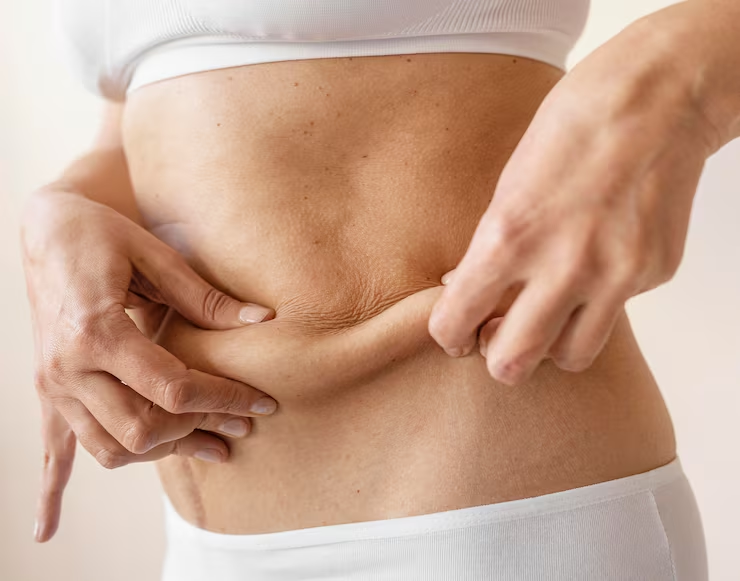
Undergoing a London fleur de lis tummy tuck provides a transformative solution for patients dealing with significant excess skin following massive weight loss or pregnancy. Unlike a standard abdominoplasty, this specialised surgical technique removes skin both horizontally across the lower abdomen and vertically along the midline. While the contouring results yield dramatic improvements to your silhouette, the trade-off is a more extensive scar pattern. Managing your recovery effectively ensures that these surgical lines fade into fine, discrete marks over time. With the right post-operative care regime guided by experienced Harley Street plastic surgeons, you can actively optimise your healing process and achieve soft, flat, and faded scars.
Understanding the Fleur de Lis Incision and Scar Formation
The Fleur de Lis procedure gets its name from the three-pointed lily design, which mirrors the incision pattern made during surgery. Surgeons utilise both a horizontal incision hidden low on the pubic line and a vertical incision running from the sternum down to the pubic bone. This dual-incision approach addresses tissue laxity in both upper and lower abdominal zones, making it far more comprehensive than a traditional horizontal resection. Patients seeking waist narrowing often weigh this option against an hourglass tummy tuck, which focuses primarily on lateral tightening and fat transfer to accentuate curves without a central vertical scar.
Scar maturation is a dynamic biological process that unfolds over twelve to eighteen months. Initially, surgical incisions appear red, raised, and firm as collagen fibres aggregate rapidly to close the skin barrier. Around the three-month mark, scar tissue reaches its peak thickness before gradually softening and lightening. Understanding this timeline prevents premature anxiety regarding the appearance of your surgical marks. The vertical component of the Fleur de Lis scar requires deliberate care because it sits directly over the abdominal wall muscle junction, an area subject to continuous tension during daily movements like bending, sitting, and laughing. Minimising mechanical strain across this vertical junction during early recovery remains a fundamental step in ensuring optimal long-term aesthetic outcomes.
Immediate Post-Operative Incision Care
Proper wound management during the first two to four weeks post-surgery lays the foundation for healthy scar formation. London surgical clinics typically apply surgical tape or waterproof dressings immediately after closing the incisions with deep dissolvable sutures. You must keep these dressings clean and dry according to your plastic surgeon’s specific guidelines. Avoid disturbing early scabs, as premature removal increases the risk of wound dehiscence and thickens the resulting scar tissue.
Wearing a fitted compression garment plays a crucial role during this early stage. Compression garments reduce seroma formation, limit swelling, and support abdominal tissues, thereby decreasing lateral traction on fresh surgical incisions. When moving, rising from a bed, or coughing, supporting your abdomen with a small pillow helps relieve temporary spikes in intra-abdominal pressure. Once your surgeon clears you to shower without dressings, wash the surgical area gently using a mild, unscented antibacterial cleanser. Pat the skin completely dry with a clean paper towel rather than rubbing with a cloth towel. Avoid soaking in baths, hot tubs, or swimming pools until all incisions have fully closed and any scabbed areas have detached naturally, typically four to six weeks post-operation.
Topical Therapies and Scar Management Protocols
Once surgical incisions have completely epithelialised with no open areas or scabbing, active scar therapy begins. Medical-grade silicone sheeting and silicone gels stand as the gold standard in non-invasive scar management. Silicone creates an occlusive micro-environment that hydrates the stratum corneum, reduces capillary activity, and normalises collagen synthesis. Applying silicone sheets or gels consistently for twelve to sixteen hours daily for at least three months significantly flattens elevated tissue and lightens hyperpigmentation.
Manual scar massage represents another vital component of your daily routine. Starting around week four post-surgery—or when cleared by your surgeon—gentle scar massage helps break down dense collagen adhesions and improves skin elasticity. Perform massage twice daily for five to ten minutes using firm, circular motions across both horizontal and vertical incisions. You can use medical silicone gel or specialised scar oils containing bio-active nutrients during massage sessions. For patients who previously evaluated an hourglass tummy tuck but chose the Fleur de Lis method for maximum skin removal, dedicated scar massage ensures that the vertical incision blends smoothly into the surrounding skin without tethering to underlying fascial layers.
Lifestyle Choices that Accelerate Skin Healing
Internal physiology dictates skin regeneration capacity. Prioritising targeted nutrition provides your body with necessary building blocks to synthesise healthy, organised collagen. Maintain a high-protein diet incorporating lean meats, fish, eggs, legumes, and tofu. Amino acids such as proline and lysine are essential for structural repair. Integrate vitamin C rich foods like citrus fruits, bell peppers, and berries to facilitate collagen cross-linking, alongside zinc supplements to support cell division and tissue repair.
Hydration is equally critical; drinking two to three litres of water daily maintains skin turgor and cellular function. Crucially, strictly avoid nicotine consumption, including smoking, vaping, and nicotine patches, for at least six weeks before and after surgery. Nicotine acts as a potent vasoconstrictor, reducing microvascular blood supply to healing incision margins, which dramatically increases skin necrosis and scar widening risks. Furthermore, safeguard your healing incisions from ultraviolet radiation. Fresh scar tissue lacks melanin protection and easily develops permanent hyperpigmentation when exposed to sunlight. Keep scars covered with protective clothing and apply broad-spectrum SPF 50+ sunscreen daily for at least one full year after your London fleur de lis tummy tuck.
Advanced Clinical Scar Treatments in London
Despite meticulous home care, some individuals possess a genetic predisposition toward hypertrophic or keloid scarring. If your scars remain red, raised, itchy, or symptomatic past the three-month mark, advanced clinical interventions available in London medical districts offer effective remedies. Plastic surgeons and dermatologists can administer targeted corticosteroid injections directly into raised scar tissue to suppress excessive fibroblast proliferation and flatten stubborn elevated areas.
Laser skin resurfacing technologies, such as vascular pulsed dye lasers (PDL) and fractional CO2 lasers, provide remarkable improvements in scar texture and discolouration. Pulsed dye laser targets abnormal blood vessels within active red scars, significantly reducing redness, while fractional lasers create micro-thermal treatment zones that stimulate structural collagen remodelling. Microneedling combined with radiofrequency energy offers another minimally invasive option to smooth textured lines. For patients seeking refined aesthetic contours similar to the smooth waistlines achieved in an hourglass tummy tuck, incorporating these advanced therapies ensures that extensive skin excision results in refined, unobtrusive scar lines. Maintaining open communication with your surgical team throughout your annual post-operative reviews guarantees timely access to these specialised treatments.
Conclusion
Managing scars after a London fleur de lis tummy tuck requires patience, a consistent post-operative routine, and proactive clinical care. While vertical and horizontal surgical lines are an inevitable trade-off for eliminating severe skin laxity, proper wound maintenance, medical-grade silicone application, and scar massage dramatically improve the final aesthetic outcome. By combining internal nutritional support with strict sun protection and expert guidance from London cosmetic specialists, you can ensure your recovery yields smooth, flat, and faded scars that reflect your body transformation goals.
